School undergrad, Michael Wong, wrote an article for the Waterloo Record about the opportunities afforded by starting one’s own business.
Meet the Experts: March 20 at 10:30 a.m. BMH 313
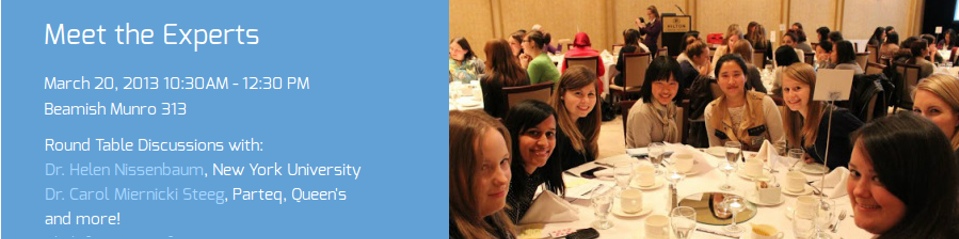
On behalf of WISC (the Women in the School of Computing), we would like to invite you to participate in an informal round table discussion with Dr. Helen Nissenbaum, Professor of Media, Culture and Communication, and Computer Science and Director of the Information Law Institute at New York University and Dr. Carol Miernicki Steeg, Vice President, Intellectual Property at PARTEQ Innovations, the technology transfer office of Queen’s University. Topics for discussion include (but are not limited to): privacy and social media, entrepreneurship, patents and intellectual property. More information can be found on the WISC event page.
The event will be held in Beamish Munro Hall (the ILC) Room 313. You will have a chance to sit with both Dr. Nissenbaum and Dr. Miernicki Steeg (30 minutes with each). The round table discussion will run from 10:30 – 11:30 followed by a (complementary) hot lunch served in Goodwin 524. There will be a chance for further discussion over lunch.
Everyone welcome — grads & undergrads!!! Free food — hot catered lunch!!!!
Please RSVP by mailing Wendy Powley — an RSVP is necessary to attend as we need to let the caterers know how many people will attend.
Dr. Nissenbaum will be also be giving the Brockington Lecture at Queen’s on March 18th at 5PM in the Agnes Etherington Art Center Atrium — “What Privacy Protects Online: The Trouble with MOOCs”. All are welcome at this event as well.
If you have any questions, please direct them to Wendy Powley.
Roel Vertegaal in the news
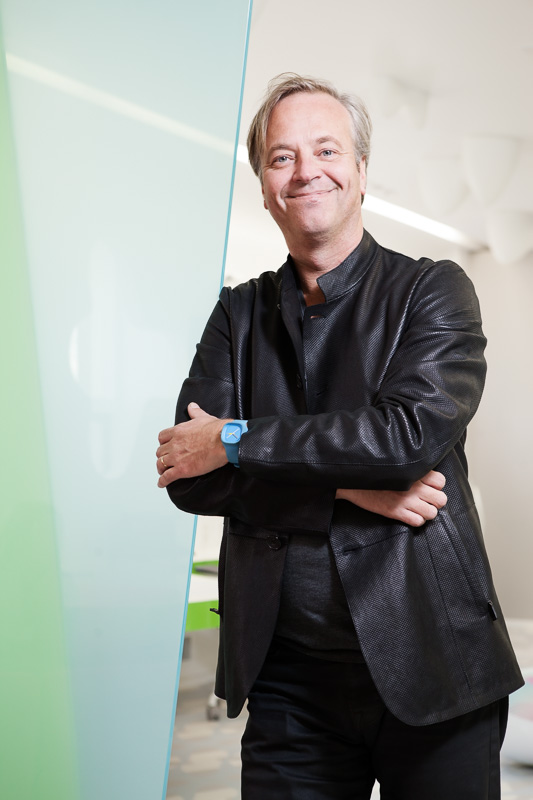
The Queen’s School of Computing Human Media Lab, and its Director Roel Vertegaal, captured the show at the Crossmedia exhibition held recently in Toronto. From an article about the event:
One day, 26 leading edge companies and creators, and just seven minutes to make your mark in a packed room of TV, radio, gaming and ad people. That was the setting for this year’s sold out Crossmedia TO conference, which set a frantic pace for the day, mirroring the reality of how fast everything is moving now in the digital realm. […] Setting the tone for the day was Roel Vertegaal, the inventor of the “paper tablet” which made headlines across the globe when unveiled at CES in January. His 10.7-inch PaperTab tablet, created as a joint project with Queen’s University Human Media Lab, Intel Labs and the United Kingdom technology firm Plastic Logic., is designed to feel like a sheet of paper but features an interactive, and flexible, high-resolution touchscreen display.
For more information, see the full article.
Congratulations to Pat Martin
Dear all,
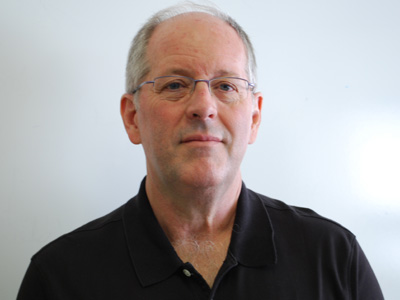
I am happy to announce that Dr. Pat Martin (Director, Database Systems Laboratory, Queen’s School of Computing) has received funding from CAS Research, IBM Canada Software Lab, in support of his project “Analytics-as-a-Service Orchestration”.
Well done!
Selim
Gates, Zuckerberg Champion Computer Programming in New Nonprofit Video
Via Reuters:
Parents should demand that more schools teach computer programming, according to a new online video campaign from Hadi and Ali Partovi, brothers who formed Code.org, a nonprofit organization created to promote computer science education. The Partovi brothers immigrated to America from Iran in 1984, and Hadi says an early interest in computers and a formal education in writing software has put them in a position to have flourishing careers. The brothers graduated with computer science degrees from Harvard University, and launched companies that were sold to Microsoft and MySpace.
The 10-minute video includes familiar startup scenes, as well as interviews with tech entrepreneurs such as Microsoft founder Bill Gates, Facebook CEO Mark Zuckerberg, and Twitter co-founder Jack Dorsey, and some unexpected pop celebrities. The brothers also have lined up endorsements from Bill Clinton, Al Gore, and American Federation of Teachers union leader Randi Weingarten. “Computer programming, right now, is the best embodiment of the American Dream,” Hadi says. “The tragedy is the skills it takes are not hard to learn, but only 10 percent of schools offer [computer science] courses, and these are usually the privileged schools.”
Nick Graham’s Work with Thales Canada Featured in the News
In the February 25 edition of the Hill Times devoted to innovation, Queen’s is promoting collaboration with industry by featuring Nick’s work with Thales Canada.
David Skillicorn Comments Further on Cyber Attacks by Chinese Hackers
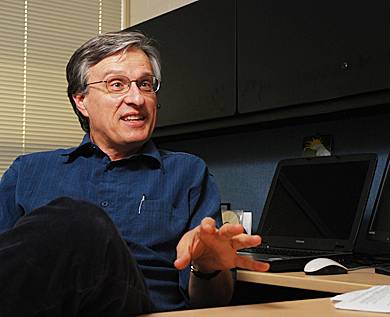
David Skillicorn commented on Canada being urged to strengthen cyber security after an alleged attack by Chinese hackers, in the International Business Times (India and United Kingdom), CBC International’s The Link, the Ottawa Citizen, Vancouver Province, Edmonton Journal, Vancouver Sun, Calgary Herald, Regina Leader Post, Montreal Gazette, the Saskatoon Star Phoenix and CTV News Channel.
Game Over for Playstation? Nick Graham Weighs in
 In a recent Globe and Mail article, Nick Graham commented on whether the new Playstation is the next big thing, or whether the game is over. Further comments were made in articles in the Vancouver Province and the Ottawa Citizen.
Congratulations to Matthew Stephan
Congratulations to Matthew Stephan, PhD candidate in the Queen’s School of Computing, on winning the Best Student Paper Award at Modelsward 2013, the International Conference on Model-Driven Engineering and Software Development in Barcelona, Spain.
His paper “A Survey of Model Comparison Approaches and Applications” based on his PhD depth work with Jim Cordy was one of only 8 of 76 (11%) of submitted full papers accepted for the conference.
Congrats Matthew!
Nick Graham Comments on the PlayStation 4
Nick Graham commented on whether the new PlayStation is the next big thing, or whether the game is over, in the Globe and Mail and on the CTV News Channel.