David was interviewed about the cyber attack on the NDP leadership convention that used more than 10,000 computers, on Global TV National, Toronto Star, Edmonton Journal, Winnipeg Free Press, Halifax Chronicle-Herald, Ottawa Citizen, Montreal Gazette, CBC.ca and many other websites and newspapers across Canada.
What do the Canadian Highway Network and Slime Mold Have in Common? Selim Akl Provides Insight
The School of Computing’s Selim Akl has recently been much in the news as he posits the similarities between the design of the Canadian Highway Network and the behaviour of slime mold. Dr. Akl was featured in The National Post, Science Daily.com, Physorg.com, Scientific Canadian, PBS, the Queen’s News Centre, the Kingston Whig Standard and CKWS TV. Follow the links below to get the whole story.
PBS
Queen’s News Centre
The Kingston Whig Standard
October 22, 2012
This story just continues to gather steam. Popular Science has published an article in their November, 2012 edition on this fascinating topic. Read it below.
Nick Graham on BioWear “A Great Canadian Success Story”
 The School of Computing’s Nick Graham commented on Edmonton video game developer BioWare, calling it “a great Canadian success story”, in the Globe and Mail and CTV.ca. Read the entire story here.
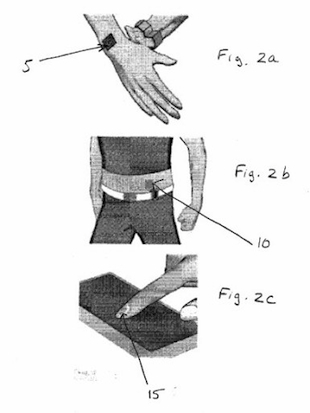
Roel Vertegaal Weighs in on Nokia’s Magnetic Tattoo
Roel was recently asked by the Toronto Star to comment on the pending patent for Nokia’s vibrating tattoo. Read the whole story here.
Nick Graham Talks About Liberi Live on The Sci Show
Watch Nick Graham comment on his interactive game Liberi Live on the Sci Show, and find out why it is fun for both players and designers (Nick’s segment begins at minute 3:15):
April 5 – Creative Computing: Art, Games, Research

Be sure to mark Thursday April 5th from 1:30-3 so that you can attend the Queen’s School of Computing’s day of Creative Computing: Art, Games, Research. The day will highlight the work of the School’s undergraduate and graduate students with hands-on demos, presentations, and posters from Game Design and Game Technology, Computing and the Creative Arts, 4th year projects, and the Queen’s School of Computing-sponsored CyberFalcon Robotics Team from Frontenac Secondary School.
The event will take place in the Biosciences Complex and will be a terrific opportunity for everyone to see first-hand what our creative students create throughout the school term.
Continue reading “April 5 – Creative Computing: Art, Games, Research”
March Break Open House – Thank You, Volunteers!
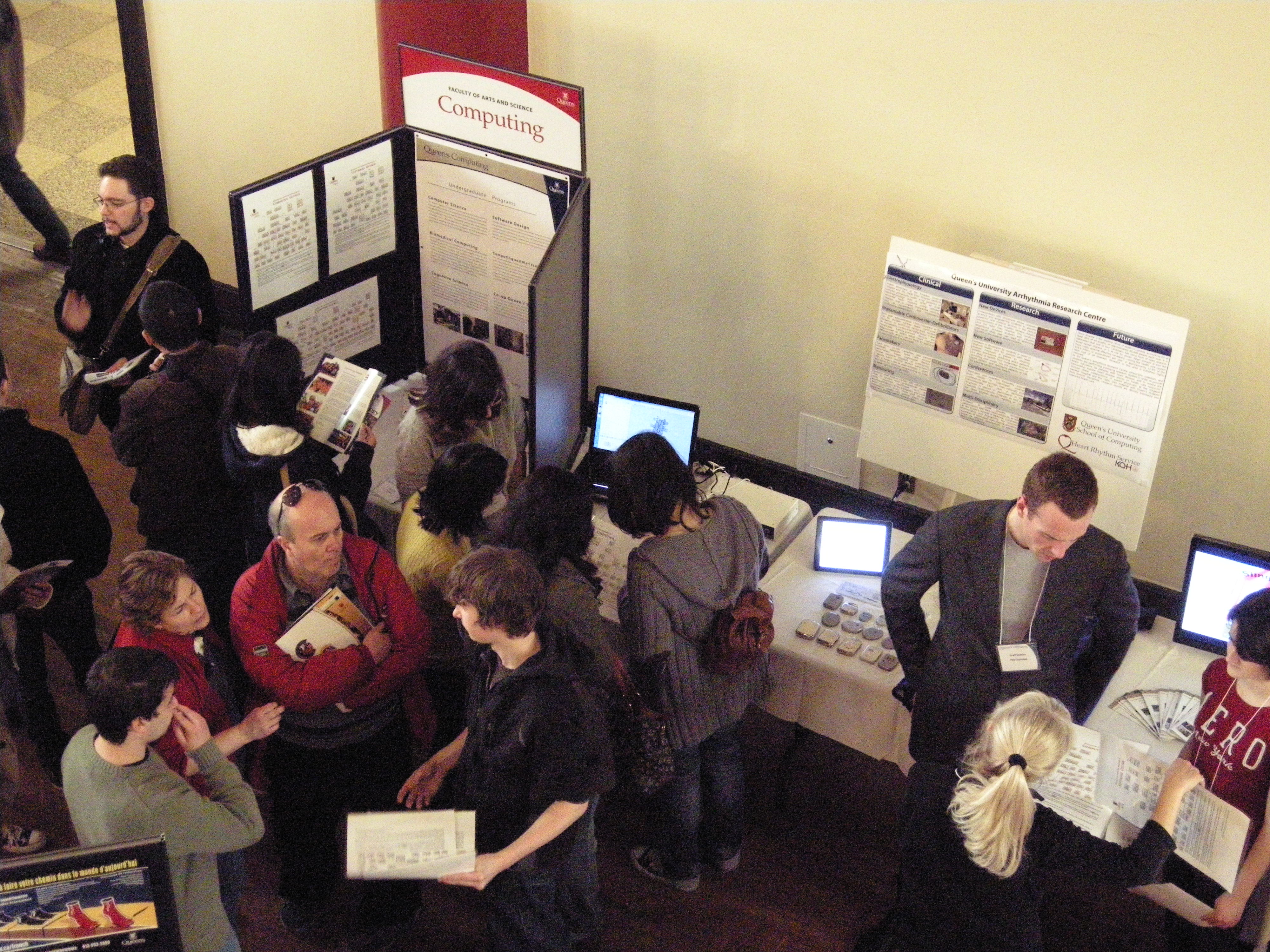
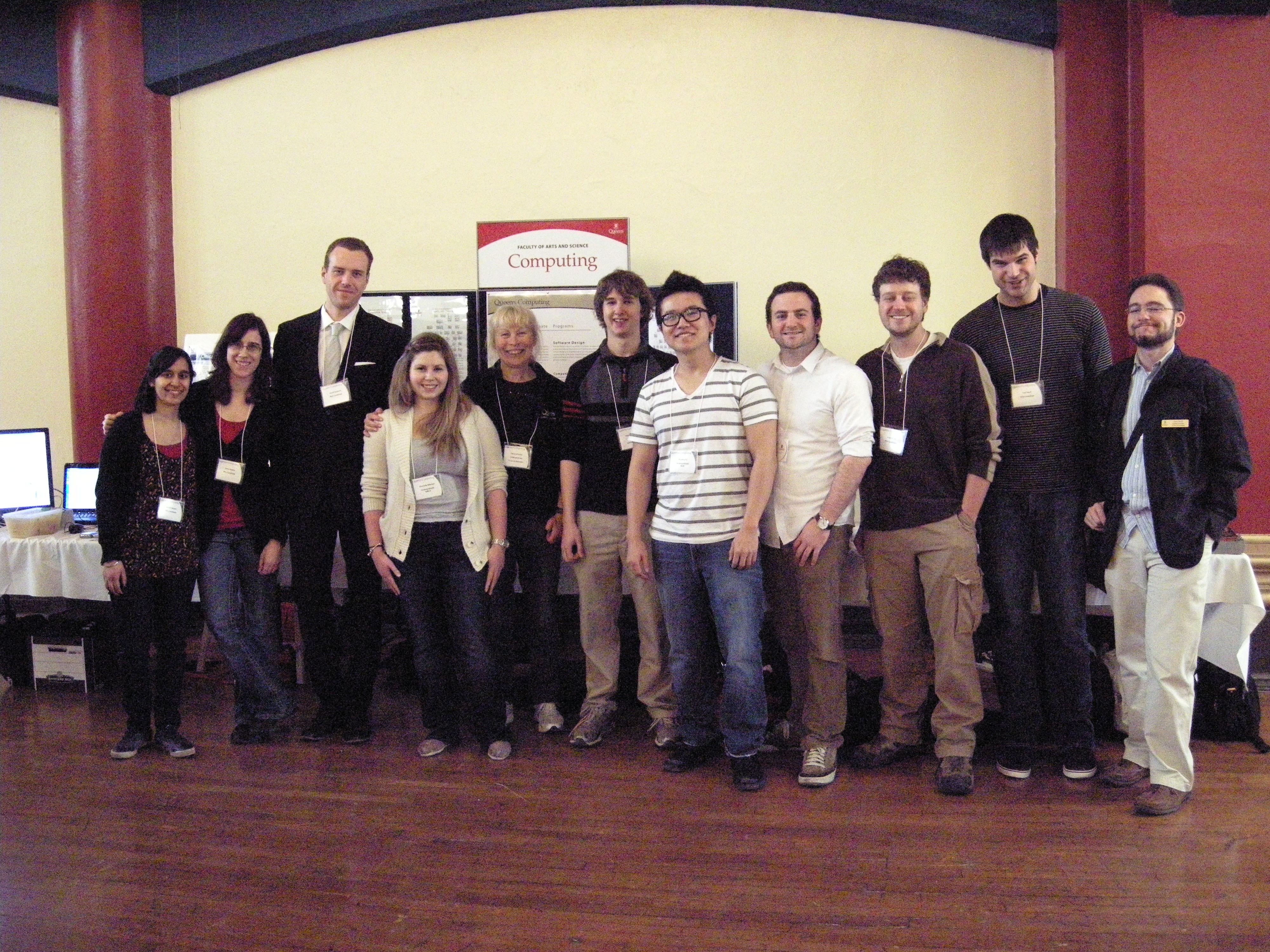
On March 12 and 13, Queen’s held a March Break Open House. The Queen’s School of Computing was well represented by a group of enthusiastic volunteers who entertained a record number of visitors, answering their questions and showing them exciting demos at the QSC station in Grant Hall. On behalf of everyone in the School many thanks to:
- Jim Cordy
- Gabor Fichtinger
- Ben Hall
- Scott Grant
- Tad Stach
- Laura Bartha
- Simrin Nagpal
- Layan Nahlawi
- Sharief Oteafy
- Charlotte Blinston
- Paul Geesaman
- Rob Staalduinen
- Leah Robert
- Cara (Bing) Yu Yu
- Boyang Fu
- Irene LaFleche
- Bob Tennent
Summer School Returns to Queen’s School of Computing
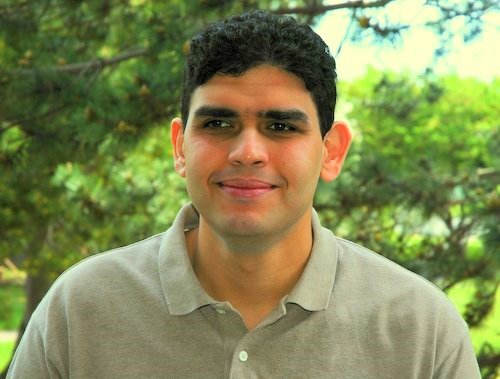 Congratulations to Ahmed Hassan of the Queen’s School of Computing on being awarded a MITACS grant to run the Second Canadian Summer School on the Future of Mining Software Repositories, in July, 2012, at Queen’s. Last year’s Summer School, also held at the QSC, was so successful that MITACS more than doubled its funding for this year’s event. Well done, Ahmed!
Canada Research Chair Awarded to Queen’s School of Computing
 The School of Computing is delighted to announce that Professor Mohammad Zulkernine has been awarded a Canada Research Chair in Software Dependability (NSERC, Tier 2). The CRC also comes with funding from the Canada Foundation for Innovation. We congratulate Mohammad on this important recognition of the excellence of his research. We also extend thanks to the Office of the Vice-Principal (Research) and to the Faculty of Arts and Science for their support. For a complete story, click here.
Welcome March Break Visitors!
The Queen’s School of Computing will be participating in the University’s March Break Open House on Monday March 12 and Tuesday March 13. You can find us in Grant Hall with three tables of demos, displays, and more. Our enthusiastic faculty, staff, and students will be on hand to answer any questions you may have.