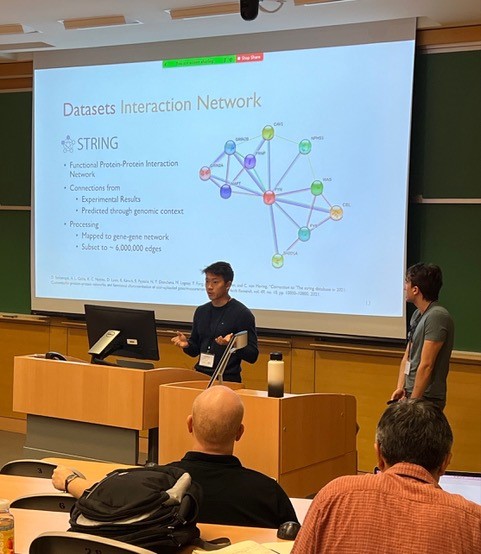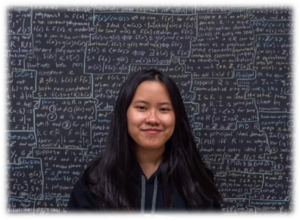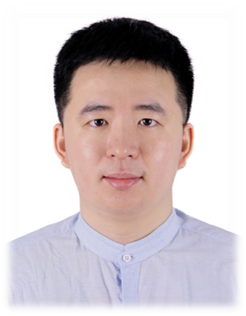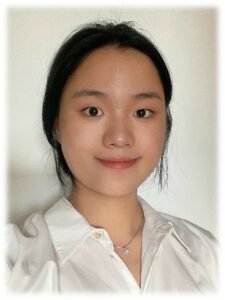
This Monday David Skillicorn appeared on CKOM Radio to speak about the prevalence of spyware, how it works, and how often is it used.
Dr. Fichtinger Receives Mitacs Globalinks Funding
We at the School of Computing are happy to congratulate Dr. Gabor Fichtinger on recent funding from the Mitacs Globalink program in support of two international trainee internships:
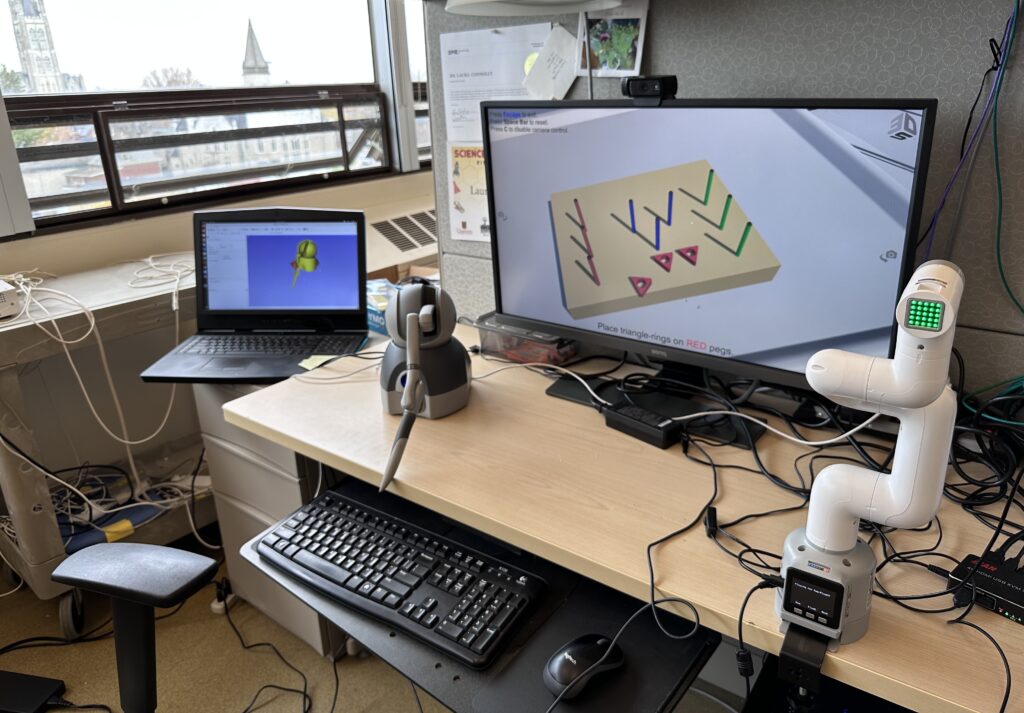
- Globalink project Real-time electromagnetic navigation of oral cancer resection supports a visiting trainee to Dr. Fichtinger’s lab from Hungary
- Globalink project SlicerAR: software platform for augmented reality medical visualization supports a visiting trainee to Dr. Fichtinger’s lab from Spain
Learn more about the leading-edge work done by Dr. Fichtinger, Canada Research Chair in Computer-Integrated Surgery, and his team at the Laboratory for Percutaneous Surgery (Perk Lab)
Dr. Yuan Tian Receives Mitacs Accelerate Funding
The School of Computing is pleased to congratulate Dr. Yuan Tian on receipt of funding from Mitacs Accelerate for her project Learning Personal Traits, Value, Skill Representations for Improved Matching of Jobs, Talent, and Courses, in collaboration with industry partner FutureCite Inc.
Go to Dr. Tian’s website to learn more about exciting work being done at the Reliable and Intelligent Software Engineering (RISE) lab.
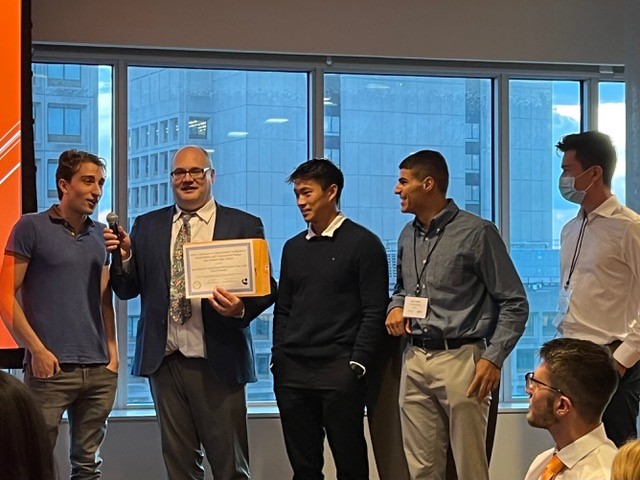
Excellence in Computing: 3 Best Paper and Best Student Paper Awards from BAM Lab in 2021
Though 2021 wasn’t an easy year for the School of Computing – with the transition to remote learning and working – our students and faculty continued to demonstrate their excellence. The Big Data Analytics and Management (BAM) Lab had three papers that won awards in the past year, a testament to the hard work and perseverance of the researchers.
The first paper was from Tariq Abughofa and Ahmed Harby, who won the 2021 IEEE Big Data Service Conference’s Best Paper Award for their paper “Incremental Community Detection in Distributed Dynamic Graph”. This publication outlines Tariq’s research about a new algorithm for efficiently updating a graph data structure with new incoming streaming data to detect strongly connected community of nodes. The technique is applicable to any connected or linked data such as social media networks, Internet of Things or connected devices, and data storage systems. The research was funded by GnowIt and SOSCIP (Smart Computing for Innovation).
The second paper was written by Jason Lam and Yuhao Chen, who won the IEEE International Conference on Data Mining and Learning in the Legal Domain (MLLD) 2021 best paper award for their work on “Detection of Similar Legal Cases on Personal Injury”. Their paper uses natural language processing and deep learning models to analyze unstructured text data from legal case descriptions, allowing for easier search for similar legal cases, an important aspect of Canada’s case law system. The paper specifically looks at cases involving personal injury and concludes that semantic similarity detection is not enough for legal case data, and artificial intelligence and machine learning are critical in finding case similarity using legal criteria. The research was funded by NSERC, NFRF and was performed in collaboration with Queen’s Law.
The third paper was written by Isaac Hogan, Donghao Qiao, Ruikang Luo, Mojtaba Moattari and Austin Carthy, who won the IEEE International Conference on Cognitive Machine Intelligence (CogMI 2021) best student paper award for their work on “FireWarn: Fire Hazards Detection Using Deep Learning Models”. Their paper posits that video cameras can be effectively used in surveillance systems to detect hazardous situations with the help of deep-learning techniques. The model created by the researchers achieved a 97% testing accuracy in labelling regions of interest in videos that show images of smoke and fire. This work was performed by the group of graduate and undergraduate researchers in collaboration with DRDC (Defense Research and Development Canada) and Royal Military College. These are just a few examples of the amazing work that happens every day here at the School of Computing. Congratulations to the students who won!



School of Computing Alumni Omar El Akkad Wins the Giller Prize!
Omar El Akkad (BsC, Computing & Information Science, 2005) is the recipient of the 2021 Scotiabank Giller Prize for his novel What Strange Paradise. The award for this prize is $100,000!
Omar is a journalist and author, known for his other major work American War, as well as his correspondence work for The Globe and Mail. Omar has covered the war in Afghanistan, the military trials at Guantanamo Bay, and the Arab Spring in Egypt.
What Strange Paradise tells the story of the global refugee crisis through the eyes of nine-year-old Amir, who is the only survivor from a ship full of refugees heading to small island nation. Omar described the book in an interview with CBC Books as “…a repurposed fable. It’s the story of Peter Pan inverted and recast as the story of a contemporary child refugee”.
Omar’s book was chosen out of a candidate pool of 132 submitted works, worked down to 12 for the prize committee to choose from. They had this to say about his book:
“Amid all the anger and confusion surrounding the global refugee crisis, Omar El Akkad’s What Strange Paradise paints a portrait of displacement and belonging that is at once unflinching and tender. In examining the confluence of war, migration and a sense of settlement, it raises questions of indifference and powerlessness and, ultimately, offers clues as to how we might reach out empathetically in a divided world.”
More information can be found on Giller Prize website or Omar’s personal website.
Announcement: Faculty Position in Intelligent Internet of Things at Queen’s School of Computing
The School of Computing in the Faculty of Arts and Science at Queen’s University announces that it is now inviting applications for a Tenure-track faculty position at the rank of Assistant or Associate Professor with a specialization in Intelligent Internet of Things (IoT). The preferred start date for the appointment is July 1, 2022.
Candidates must hold a Ph.D. in Computer Science or a related discipline. The ideal candidate is required to demonstrate that they are an outstanding scientist and educator. The preferred candidate must demonstrate comprehensive research expertise that complements existing research areas in the School of Computing. The candidate will build on and extend the School’s existing research strengths in Internet of Things (IoT), Connected and Autonomous Vehicles, Distributed Computing and Networks and Mobile Edge Computing.
The main criteria for selection are:
(i) a genuine, demonstrated commitment to academic and teaching excellence in a post-secondary computing education environment.
(ii) a demonstrated capacity for research in Intelligent IoT.
While at the School of Computing, the successful candidate will be expected to demonstrate outstanding teaching contributions at both the undergraduate and graduate levels, service and administration and research or scholarship. Support for course development and delivery as well as the scholarship of teaching and learning will be provided to the successful candidate by the Faculty of Arts and Science and through the Queen’s Centre for Teaching and Learning.
The successful candidate is required to provide evidence of high-quality scholarly output that demonstrates the potential for independent research leading to peer-assessed publications and the potential of securing of external research funding. Additionally, the successful candidate will be expected to:
- work collaboratively in an interdisciplinary and student-focused environment;
- contribute to academic and pedagogical excellence in support of the QSC programs, including on-line and professional programs; and
- provide effective service contributions to the School, the Faculty of Arts and Science, the University, and the broader community.
The School of Computing has 35 full-time and 20 cross-appointed faculty, over 1200 undergraduate students, and over 200 graduate students. The School offers undergraduate programs in Computer Science, Software Design, Biomedical Computing, Computing and Mathematics, Computing and the Creative Arts and Cognitive Science, as well as dedicated major options in Artificial Intelligence, Biomedical Computation, Data Analytics, Fundamental Computation, Game Development, and Security. The School also offers Master’s and Doctoral programs in Computer Science, with dedicated programs for Artificial Intelligence, Cybersecurity, and Biomedical Informatics.
People from across Canada and around the world come to learn, teach, and carry out research at Queen’s University. Faculty and their dependents are eligible for an extensive benefits package including prescription drug coverage, vision care, dental care, long term disability insurance, life insurance and access to the Employee and Family Assistance Program. You will also participate in a pension plan. Tuition assistance is available for qualifying employees, their spouses, and dependent children. Queen’s values families and is pleased to provide a ‘top up’ to government parental leave benefits for eligible employees on maternity/parental leave. In addition, Queen’s provides partial reimbursement for eligible daycare expenses for employees with dependent children in daycare. Details are set out in the Queen’s-QUFA Collective Agreement. For more information on employee benefits, see Queen’s Human Resources.
Additional information about Queen’s University can be found on the Faculty Recruitment and Support website. The University is situated on the traditional territories of the Haudenosaunee and Anishinaabe, in historic Kingston on the shores of Lake Ontario. Kingston’s residents enjoy an outstanding quality of life with a wide range of cultural, recreational, and creative opportunities. Please see Inclusive Queen’s for information on equity, diversity, and inclusion resources and initiatives.
The University invites applications from all qualified individuals. Queen’s is strongly committed to employment equity, diversity and inclusion in the workplace and encourages applications from Black, racialized/visible minority and Indigenous/Aboriginal people, women, persons with disabilities, and 2SLGBTQ+ persons. All qualified candidates are encouraged to apply; however, in accordance with Canadian immigration requirements, Canadian citizens and permanent residents of Canada will be given priority.
To comply with federal laws, the University is obliged to gather statistical information as to how many applicants for each job vacancy are Canadian citizens / permanent residents of Canada. Applicants need not identify their country of origin or citizenship; however, all applications must include one of the following statements: “I am a Canadian citizen / permanent resident of Canada”; OR, “I am not a Canadian citizen / permanent resident of Canada”. Applications that do not include this information will be deemed incomplete.
The impact of certain circumstances that may legitimately affect a nominee’s record of research achievement will be given careful consideration when assessing the nominee’s research productivity. Candidates are encouraged to provide any relevant information about their experience and/or career interruptions.
A complete application consists of:
- a cover letter (including one of the two statements regarding Canadian citizenship / permanent resident status specified above);
- a current Curriculum Vitae (including a list of publications);
- a statement of teaching interests and experience (including teaching outlines and evaluations if available);
- a statement of research interests; and
- the names and contact information of three referees.
Applications should be submitted on or before December 13, 2021. Applicants are encouraged to send all documents in their application packages electronically as a single PDF, Attn: Chair of Faculty Search Committee at cssearch2021@cs.queensu.ca, although hard copy applications may be submitted to:
Faculty Search Committee Chair
The School of Computing
557 Goodwin Hall
Queen’s University
Kingston, Ontario
CANADA K7L 3N6
Applicants should arrange for ***THREE*** letters of recommendation to be sent directly by their three selected referees to the Chair of Faculty Search Committee at refletter2021@cs.queensu.ca by the closing date of December 13, 2021.
The University will provide support throughout the recruitment processes to applicants with disabilities, including accommodations that take into account an applicant’s accessibility needs. If you require accommodation during the interview process, please contact Robin Tippet in the School of Computing at robin.tippett@queensu.ca. Academic staff at Queen’s University are governed by a Collective Agreement between the University and the Queen’s University Faculty Association (QUFA).
Announcement: Tenure-Track Position in Theoretical Artificial Intelligence at Queen’s School of Computing
The School of Computing in the Faculty of Arts and Science at Queen’s University announces that it is now inviting applications for a Tenure-track faculty position at the rank of Assistant Professor or a Tenured faculty position at the rank of Associate Professor with specialization in theoretical artificial intelligence (AI). The preferred start date for the appointment is July 1, 2022.
Candidates must hold a Ph.D. in Computer Science or a related discipline. The ideal candidate will be required to provide evidence of outstanding contributions as a scientist and educator, as well as comprehensive research expertise that complements existing research areas in the School of Computing. The successful candidate will build on and extend the School’s existing research strengths in artificial intelligence (AI) and theory of computation.
The main criteria for selection are:
(i) a genuine, demonstrated commitment to academic and teaching excellence in a post-secondary computing education environment.
(ii) a demonstrated capacity for research in theory of computation as applied to AI.
While at the School of Computing, the successful candidate will be expected to demonstrate outstanding teaching contributions at both the undergraduate and graduate levels, service and administration and research or scholarship. Support for course development and delivery as well as the scholarship of teaching and learning will be provided to the successful candidate by the Faculty of Arts and Science and through the Queen’s Centre for Teaching and Learning.
The successful candidate will be required to provide evidence of high-quality scholarly output that demonstrates the potential for independent research leading to peer-assessed publications and the potential of securing external research funding. Additionally, the successful candidate will be expected to:
- work collaboratively in an interdisciplinary and student-focused environment.
- contribute to academic and pedagogical excellence in support of the QSC programs, including on-line and professional programs.
- provide effective service contributions to the School, the Faculty of Arts and Science, the University, and the broader community.
The School of Computing has 35 full-time and 20 cross-appointed faculty, over 1200 undergraduate students, and over 200 graduate students. The School offers undergraduate programs in Computer Science, Software Design, Biomedical Computing, Computing and Mathematics, Computing and the Creative Arts and Cognitive Science, as well as dedicated major options in Artificial Intelligence, Biomedical Computation, Data Analytics, Fundamental Computation, Game Development, and Security. The School also offers Master’s, and Doctoral programs in Computer Science, with dedicated programs for Artificial Intelligence, Cybersecurity, Medical Informatics, and Biomedical Informatics.
People from across Canada and around the world come to learn, teach, and carry out research at Queen’s University. Faculty and their dependents are eligible for an extensive benefits package including prescription drug coverage, vision care, dental care, long term disability insurance, life insurance and access to the Employee and Family Assistance Program. You will also participate in a pension plan. Tuition assistance is available for qualifying employees, their spouses, and dependent children. Queen’s values families and is pleased to provide a ‘top up’ to government parental leave benefits for eligible employees on maternity/parental leave. In addition, Queen’s provides partial reimbursement for eligible daycare expenses for employees with dependent children in daycare. Details are set out in the Queen’s-QUFA Collective Agreement. For more information on employee benefits, see Queen’s Human Resources.
Additional information about Queen’s University can be found on the Faculty Recruitment and Support website. The University is situated on the traditional territories of the Haudenosaunee and Anishinaabe, in historic Kingston on the shores of Lake Ontario. Kingston’s residents enjoy an outstanding quality of life with a wide range of cultural, recreational, and creative opportunities. Please see Inclusive Queen’s for information on equity, diversity, and inclusion resources and initiatives.
The University invites applications from all qualified individuals. Queen’s is strongly committed to employment equity, diversity and inclusion in the workplace and encourages applications from Black, racialized/visible minority and Indigenous/Aboriginal people, women, persons with disabilities, and 2SLGBTQ+ persons. All qualified candidates are encouraged to apply, however, in accordance with Canadian immigration requirements, Canadian citizens and permanent residents of Canada will be given priority.
To comply with federal laws, the University is obliged to gather statistical information as to how many applicants for each job vacancy are Canadian citizens / permanent residents of Canada. Applicants need not identify their country of origin or citizenship; however, all applications must include one of the following statements: “I am a Canadian citizen / permanent resident of Canada”; OR, “I am not a Canadian citizen / permanent resident of Canada”. Applications that do not include this information will be deemed incomplete.
The impact of certain circumstances that may legitimately affect a nominee’s record of research achievement will be given careful consideration when assessing the nominee’s research productivity. Candidates are encouraged to provide any relevant information about their experience and/or career interruptions.
A complete application consists of:
- a cover letter (including one of the two statements regarding Canadian citizenship / permanent resident status specified above);
- a current Curriculum Vitae (including a list of publications);
- a statement of teaching interests and experience (including teaching outlines and evaluations if available);
- a statement of research interests; and
- the names and contact information of three referees.
Faculty Search Committee Chair
The School of Computing
557 Goodwin Hall
Queen’s University
Kingston, Ontario
CANADA K7L 3N6
Applications should be submitted on or before November 30, 2021. Applicants are encouraged to send all documents in their application packages electronically as a single PDF, Attn: Chair of Faculty Search Committee at cssearch2021@cs.queensu.ca, although hard copy applications may be submitted to:
Applicants should arrange for ***THREE*** letters of recommendation to be sent directly by their three selected referees to the Chair of Faculty Search Committee at refletter2021@cs.queensu.ca by the closing date of November 30, 2021.
The University will provide support throughout the recruitment processes to applicants with disabilities, including accommodations that take into account an applicant’s accessibility needs. If you require accommodation during the interview process, please contact Robin Tippet in the School of Computing at robin.tippett@queensu.ca.
Academic staff at Queen’s University are governed by a Collective Agreement between the University and the Queen’s University Faculty Association (QUFA).